Where is the water actually coming from?
That is the first question, and on a surprising number of properties nobody has asked it. A downspout gets extended, a low spot gets filled, a sump gets a bigger pump, and the water comes back the next spring because none of those things addressed the source. Drainage and water management is our primary service, and the reason we lead with it is that we treat it as a diagnosis before it is an installation.
The source is usually one of a handful of things. Roof water landing next to the foundation instead of being carried away. Ground that falls toward the house rather than away from it. Water arriving from a neighboring property that is higher than yours. A failed or crushed line underground that used to carry water somewhere and no longer does. A sump discharging six feet from the wall it just pumped water away from. Each of those has a different fix, and installing the wrong one is how people end up paying twice.
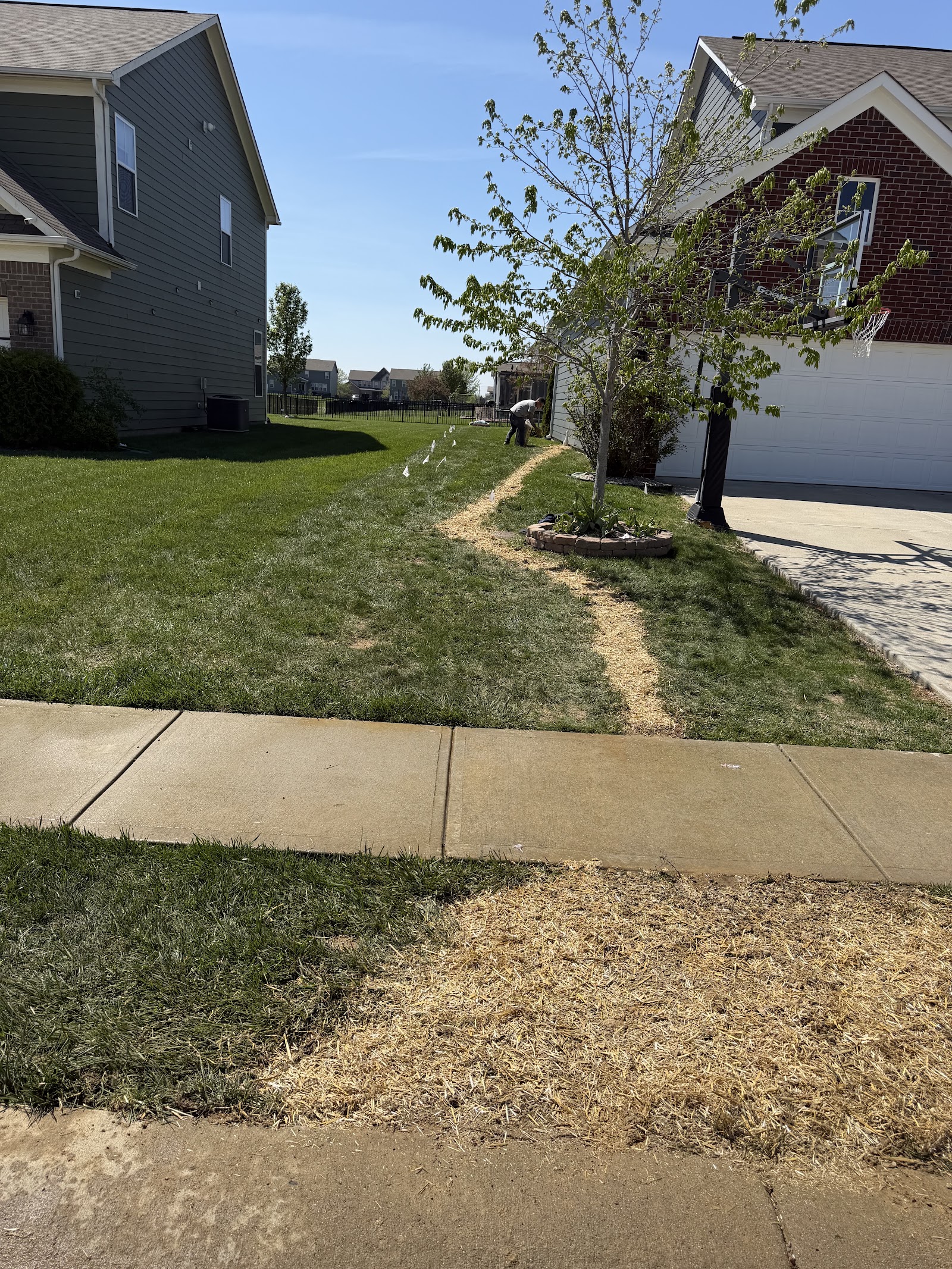
Once we know the source, we design the system around it. That might be a French drain, a curtain drain to intercept water before it reaches the house, buried downspout lines run to a pop-up or to daylight, catch basins in the low spots, a swale to move surface water without pipe, a dry well where there is nowhere good to discharge, or a culvert where the water crosses a drive. Most real jobs are a combination, because most properties have more than one thing going wrong at once.
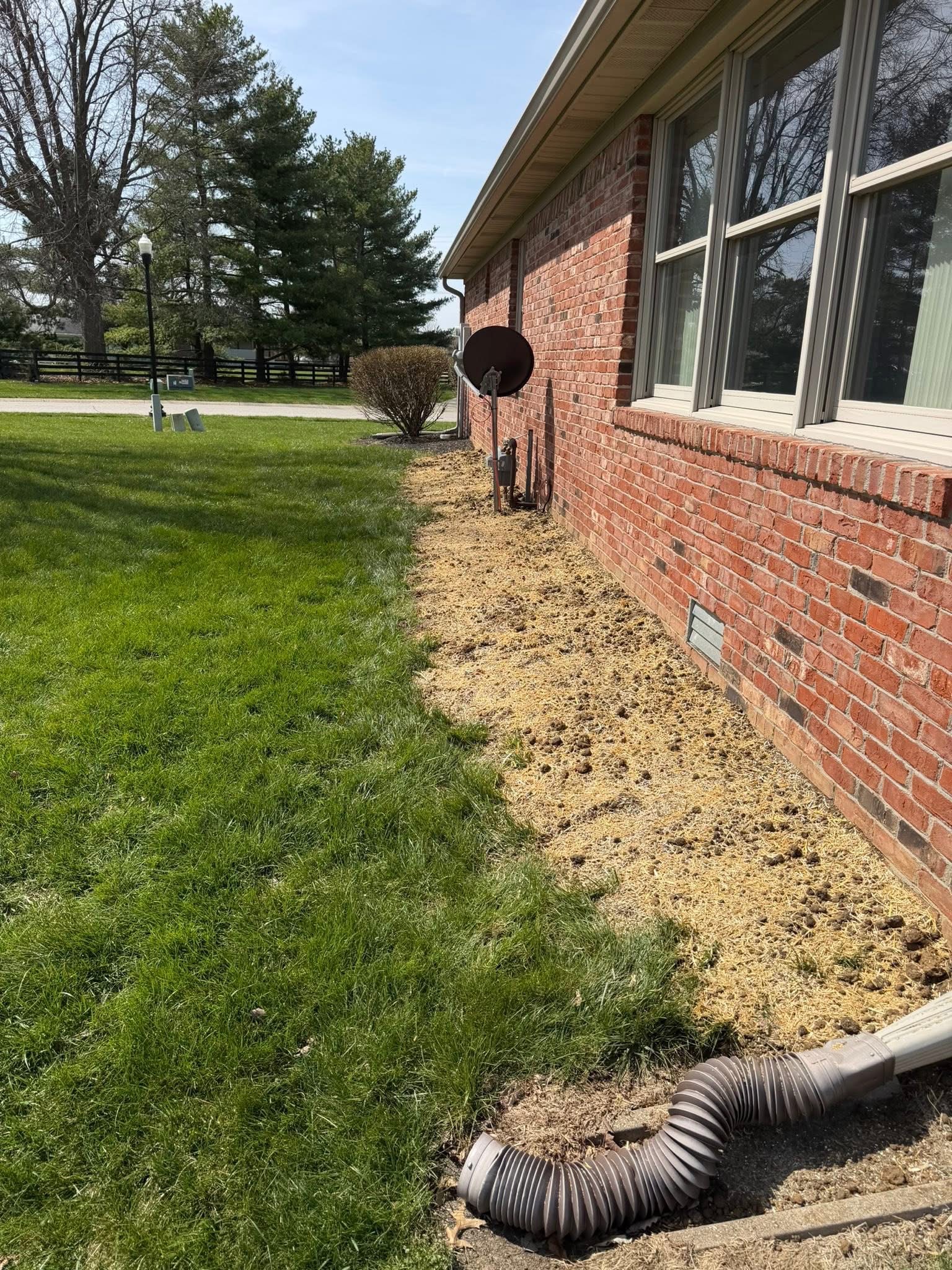
We verify elevations and drainage flow before we price it, because fall is what makes a drainage system work. A pipe with no fall is a storage tank. Then you get a written proposal with the scope laid out, we pull permits where they are required, and we install with materials that will still be doing their job long after the sod has grown back over the trench.
The last part matters as much as the first. Trenching across a lawn tears it up, and how the ground gets put back is the difference between a repair you notice for one season and a scar you look at for five. We backfill, restore the disturbed areas with top soil and seed, and walk the finished job with you. One of our Google reviewers described exactly that: they made sure the ground was back together with top soil and grass seed, and picked up all discarded items and trash.
A pipe with no fall is a storage tank. Verifying elevations is not paperwork, it is the difference between a system that drains and one that holds water.
Why we check before we quote