Water is patient. It will spend years finding the low spot beside your foundation, the soft corner of the yard, the little channel it cut through the mulch bed. Drainage work is how you take that decision away from the water and make it yourself. At Sterling's Affordable Excavating we bury downspout lines, correct yard and foundation drainage, and grade with erosion in mind, so rain leaves your property on your terms.
Around Hendricks County the soil makes this matter more than most places. Our clay holds water near the surface instead of letting it soak away, which is why so many local yards stay squishy for days and so many crawlspaces smell damp every spring. A husband and wife team, Casey and Ashley Jones, runs this company, and drainage jobs are some of our favorites for a simple reason: the before and after is dramatic, and the fix tends to stay fixed.
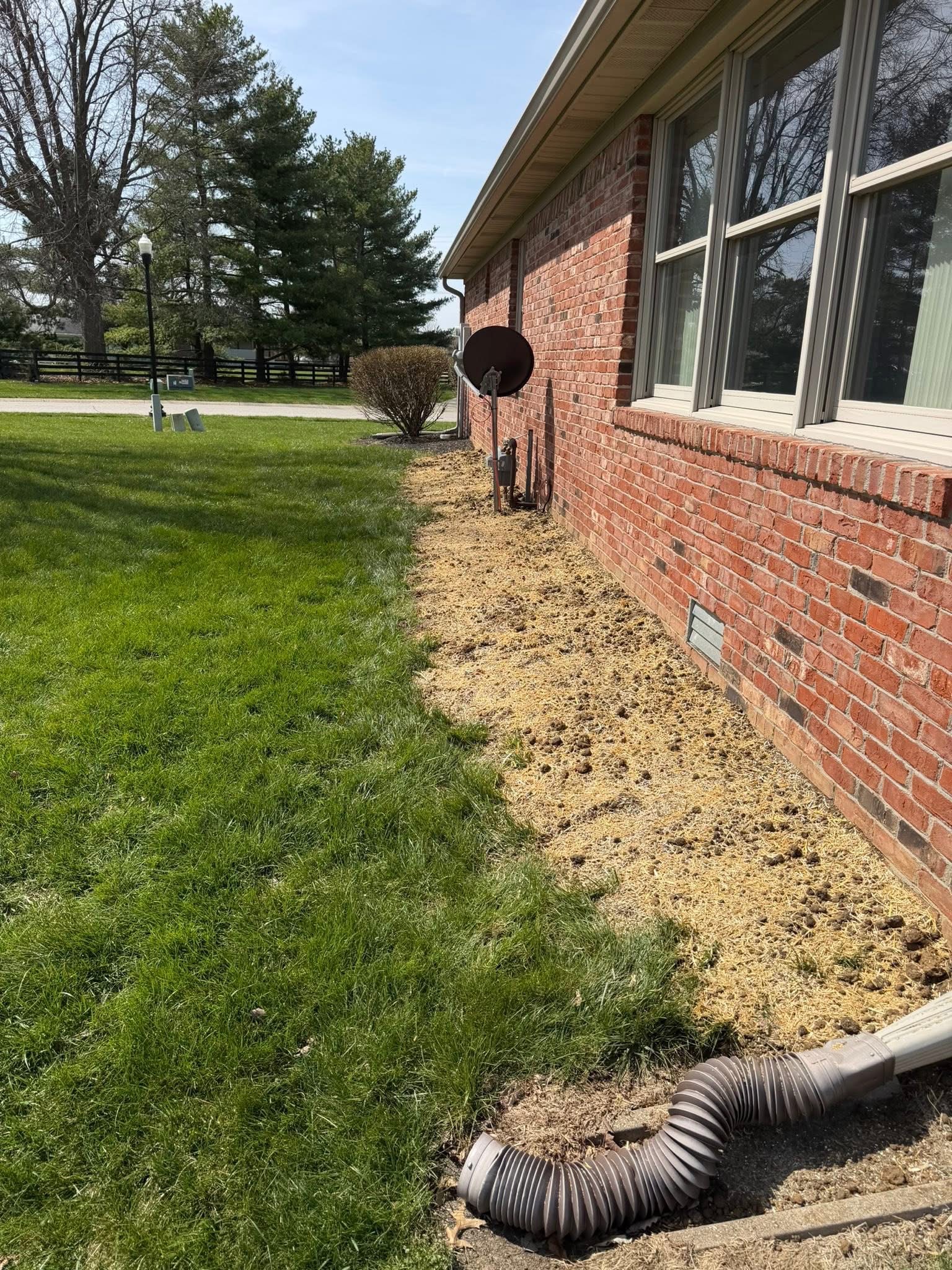
What's Included
Most drainage projects combine a couple of these pieces into one plan built around how water actually moves on your lot:
- Buried downspout lines that carry roof water well away from the house
- Pop-up emitters and daylight outlets that release water safely downhill
- Buried sump pump discharge lines so the pump stops flooding the lawn
- Yard and foundation drainage corrections for chronic wet spots
- Swales and surface shaping that give runoff a planned path
- Erosion-minded grading that slows water instead of letting it cut channels
The order matters. Burying downspouts without fixing a bad grade, or regrading while the gutters still dump at the foundation, only solves half the problem. We look at the whole picture and tell you which pieces your yard actually needs, and just as important, which ones it does not.
When Do You Need Drainage Work?
Are your downspouts dumping water right at the foundation?
A roof sheds an enormous amount of water in a storm, and a downspout with a short splash block drops most of it within a few feet of your foundation. Burying the line and carrying that water out to a pop-up emitter or daylight outlet moves the problem away from the house entirely. It is one of the highest value fixes in this trade.
Is the basement or crawlspace damp after every rain?
Moisture below the house usually starts with water being delivered to the outside of it. Before spending big on interior waterproofing, it is worth fixing the outside: pitch the ground away from the walls and get roof and sump water piped off to a better spot. Many damp crawlspaces dry up once the yard stops feeding them.
Does part of your yard stay soggy for days?
If one area squishes underfoot long after the rain quits, water is arriving there faster than the clay can drink it. Depending on the spot, the fix might be a swale, a regrade, or a buried line that gives the water an exit. We figure out which during the walk through.
Is runoff cutting channels or washing out your mulch and soil?
Erosion means water is moving too fast in a path it chose for itself. We reshape the grade to slow it down, spread it out, or capture it in a pipe before it builds speed. Catching this early protects your topsoil, your landscaping, and everything downhill.
How We Work
Call or text (317) 503-6782 and describe what the water is doing. If you can, snap photos during a storm, because water tells on itself. Casey will walk the property with you, trace where runoff comes from and where it goes, and lay out a plan that deals with causes instead of symptoms. Before any trenching we get utility locates handled, then you get a free estimate that spells out the plan in plain words.
During the work we cut trenches clean, set sod aside where we can so it goes back over the line, and compact and dress the surface when the pipe is in. We finish by walking the job with you and showing you where your water will go from now on.
What Affects the Cost
Drainage estimates mostly come down to distance, depth, and digging conditions. Longer trench runs and more downspouts tied in mean more time. Soil is a real factor here, since heavy clay and root filled ground trench slower than clean loam. Access matters as well, because a machine that can reach the line beats hand work through a tight gate. Finally, where the water can reasonably discharge shapes the design, and so does how much surface restoration you want over the finished lines.
Rather than guess at any of it, have us look. Estimates are free, and a short walk around your yard will tell us most of what we need.
Why Sterling's
This is a family owned company, run by Casey and Ashley Jones, husband and wife. Drainage work means trenching through lawns people care about, so it matters that our reviews single out care for the property. One customer wrote, "Casey and his team worked quickly, taking pride in respecting our request and property." That is exactly the temperament you want from the crew digging through your yard.
Common Questions
How deep are buried downspout lines?
Deep enough to stay out of the way of mowing, aeration, and normal yard life, with the exact depth set by the route and the fall the line needs to drain properly. We set that on site, not from a chart.
Where does the water come out?
Usually at a pop-up emitter in the lawn or a daylight outlet on a downhill slope, positioned so the discharge causes no new problems for you or your neighbors. Picking that spot well is half the design.
Will my yard show trench scars afterward?
For a while you will see the lines, since disturbed ground takes a season to blend in. We minimize it by saving sod where possible and compacting and finishing the surface carefully.
Can you fix grading and drainage as one project?
Yes, and most of the time you should. Piping and grading work best as one plan, and combining them means one mobilization and one cleanup instead of two.
If water is winning at your place, let's change that. Call or text, and we will walk the yard, find where the water is going wrong, and give you a free estimate on making it behave.
Free Estimate: (317) 503-6782